India Announces Opium Poppy Licensing Policy for 2025-26

India Announces Opium Poppy Licensing Policy for 2025-26

Daily Current Affairs   /   India Announces Opium Poppy Licensing Policy for 2025-26

Change Language English Hindi

Category : National Published on: September 16 2025

Share on facebook

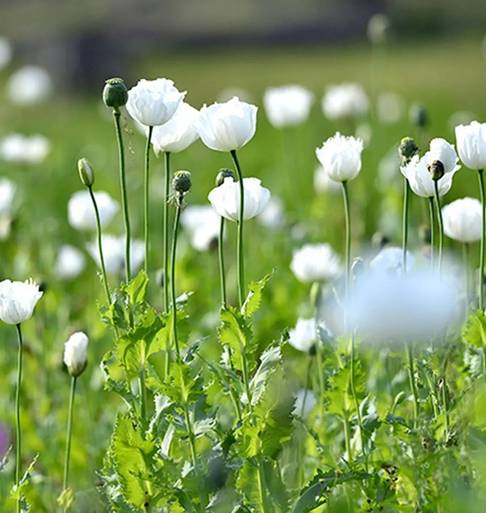
The Government of India has announced the 2025-26 opium poppy cultivation policy, which will run from October 1, 2025, to September 30, 2026. It covers Madhya Pradesh, Rajasthan, and Uttar Pradesh. Farmers who grow high yields (4.2 kg per hectare or more) will continue with opium gum cultivation. Those with medium yields (3.0–4.2 kg per hectare) can grow unlanced poppy straw (CPS) under five-year licenses. CPS farmers producing 900 kg per hectare or more are encouraged to switch to opium gum, while farmers producing less than 800 kg per hectare may lose their license. The Government Alkaloid Factory in Neemuch has earned WHO GMP certification, helping India make more medicines from opium safely. The policy supports farmers, medical needs, and self-reliance.

Recent Post's
  • US President Donald Trump announced a new ‘Trump-class’ of heavily armed warships to modernise and expand the US Navy amid concerns over China’s growing naval power.

    Read More....
  • Advocate Shubham Awasthi was honoured with the 40 Under 40 Lawyer Award 2025 for his professional excellence and humanitarian contributions.

    Read More....
  • Oman has introduced its first polymer one-rial banknote, issued by the Central Bank of Oman, to enhance currency durability and security.

    Read More....
  • The NSSH Scheme of the MSME Ministry promotes SC/ST entrepreneurship by providing capacity building, market access and support for mandatory 4% public procurement.

    Read More....
  • Kisan Diwas is celebrated on 23 December every year to honour farmers’ contributions and mark the birth anniversary of Chaudhary Charan Singh.

    Read More....
  • India has excluded the dairy sector from its free trade agreement with New Zealand to protect small domestic dairy farmers.

    Read More....
  • India handed over three Quick Impact Projects (QIPs) to Myanmar’s Mandalay Region to boost vocational education, women’s training, and clean energy initiatives.

    Read More....
  • Supreme Court defines Aravalli Hills uniformly, emphasizing ecological and geological conservation across Gujarat, Rajasthan, Haryana, and Delhi.

    Read More....
  • JNCASR researchers discover the exocyst protein complex, a key regulator of cellular autophagy, with implications for neurodegenerative diseases and cancer.

    Read More....
  • India exported 3 metric tonnes of GI-tagged Indi Lime from Karnataka to Oman, enhancing global market access under the India-Oman CEPA/FTA.

    Read More....